What It Really Takes to Build a Successful Food Business in New Zealand’s Largest City
Exceutive summary
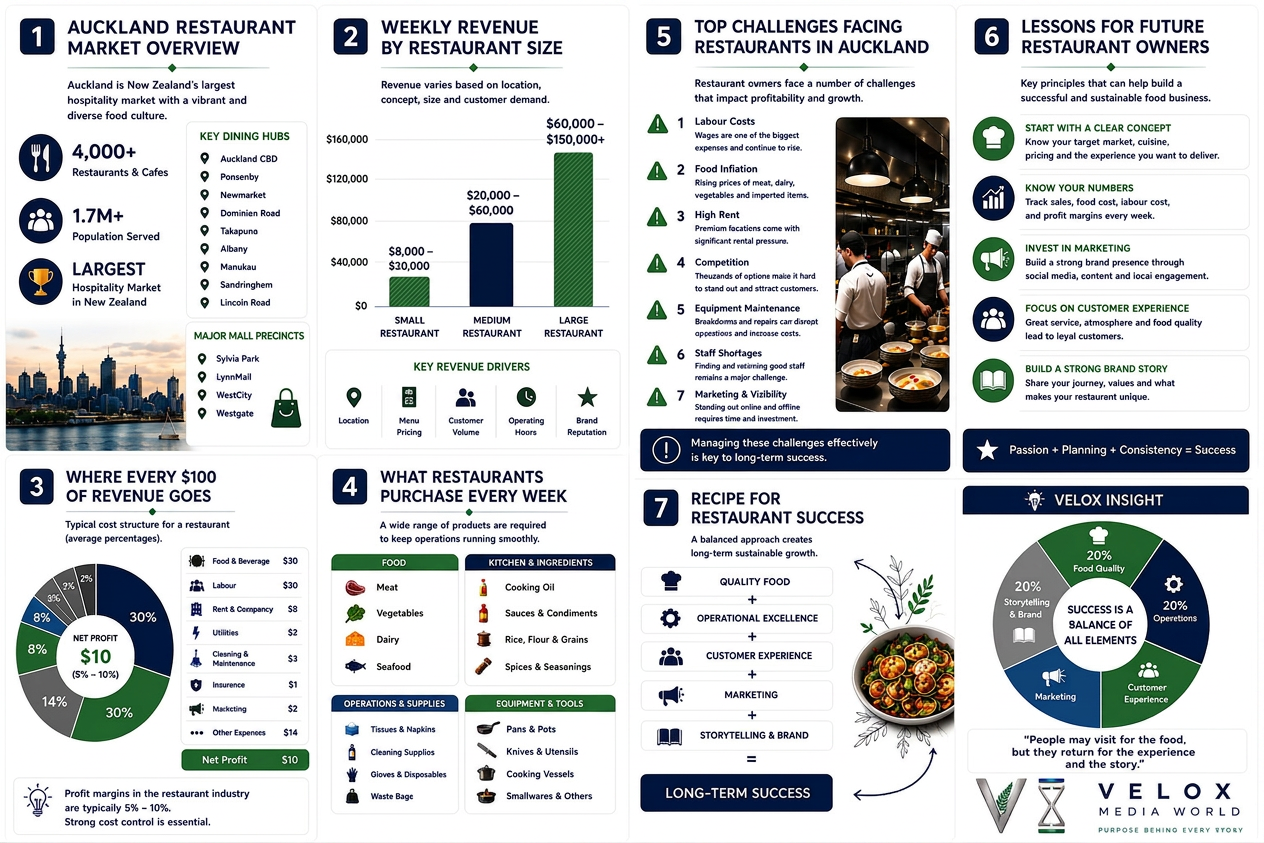
- Auckland boasts a vibrant hospitality market, featuring over 4,000 restaurants, cafes, and food-service businesses. This makes it the largest such market in New Zealand. The sector includes a wide range of options, from family-owned eateries and takeaway shops to upscale dining establishments, and it plays a vital role in contributing to Auckland’s economy and employment opportunities.
- For entrepreneurs, the restaurant industry presents both opportunity and risk. While successful businesses can generate substantial weekly revenue, owners must manage labour costs, food inflation, rent, marketing, and customer expectations in an increasingly competitive environment.
- This report explores the Auckland restaurant market, operating costs, profitability drivers, industry challenges, and practical lessons for future restaurant owners.
Introduction
Why Auckland?
Market Overview
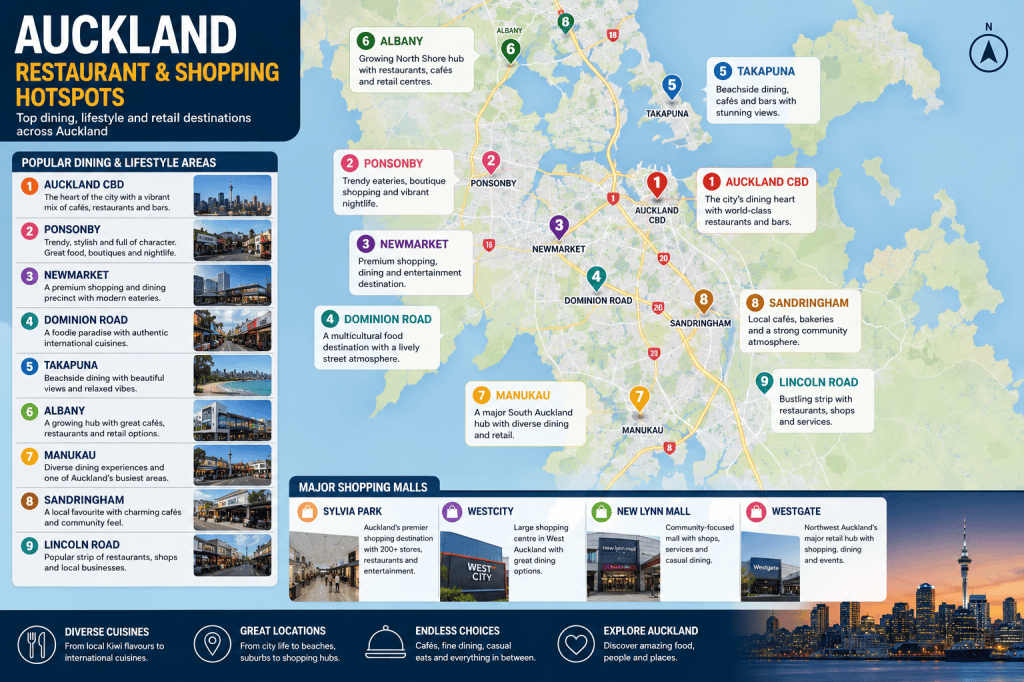
Auckland’s restaurant sector includes cafes, takeaway outlets, casual dining establishments, and premium restaurants. Popular hospitality hubs include the Auckland CBD, Ponsonby, Newmarket, Takapuna, and Dominion Road. The city’s multicultural population supports a wide variety of cuisines and dining experiences.
B. Industry Importance
Restaurants contribute to employment, tourism, and local economic activity. They also support suppliers across agriculture, food manufacturing, logistics, and retail sectors.
Market Size
The Auckland region contains approximately 4,000 restaurant and cafe businesses, representing nearly half of New Zealand’s hospitality sector.
The industry includes:
- Cafes
- Restaurants
- Fast-food outlets
- Ethnic cuisine businesses
- Dessert stores
- Food trucks
- Bars and gastro-pubs
Why This Industry Matters
Restaurants are more than places to eat. They create employment, support local suppliers, contribute to tourism, and help build community identity.
Revenue, Expenses and Profitability
a. Revenue
Restaurant revenue varies depending on size, location, and customer demand. Small restaurants may generate between NZ$8,000 and NZ$20,000 per week, while medium-sized businesses often achieve NZ$20,000 to NZ$60,000 weekly sales.
b. Expenses
The largest operating expenses are labour and food purchases. Restaurants must regularly purchase vegetables, meat, seafood, dairy products, cooking oil, sauces, cleaning supplies, tissues, packaging materials, and kitchen equipment. Additional costs include rent, utilities, insurance, maintenance, and marketing.
c. Profitability
Most restaurants operate on relatively low profit margins, typically between 5% and 10%. Effective cost control, inventory management, and staffing efficiency are essential for long-term success.
Major Challenges
a. Labour Costs
Staff wages are one of the largest expenses for restaurant operators and continue to rise across the hospitality sector.
b. Food Inflation
Increasing costs of meat, dairy products, vegetables, and imported ingredients place pressure on profit margins.
b. Competition
Auckland’s hospitality market is highly competitive, requiring businesses to differentiate through food quality, service, atmosphere, and branding.
d. Operational Risks
Equipment breakdowns, staffing shortages, and changing consumer preferences can create additional challenges for restaurant owners.
Lessons for Future Restaurant Owners
a. Start with a Clear Concept
Successful restaurants have a well-defined target market, menu, and customer experience.
b. Understand the Numbers
Owners should closely monitor sales, food costs, labour costs, and profit margins to maintain financial sustainability.
c. Invest in Marketing
Strong branding, social media presence, and storytelling can help attract and retain customers.
d. Focus on Customer Experience
Food quality, service standards, and atmosphere all influence customer loyalty and repeat business.
Conclusion
The Auckland restaurant industry offers attractive opportunities for entrepreneurs but requires careful planning and disciplined management. While customer demand remains strong, businesses must manage costs, maintain quality, and build a distinctive brand to succeed. Restaurants that combine operational excellence with strong customer experiences are best positioned for long-term growth.
References
Figure NZ. (2025). Businesses in the cafes and restaurants industry in New Zealand. Retrieved from https://figure.nz
Hospitality New Zealand. (2025). Annual Hospitality Industry Report. Retrieved from https://www.hospitality.org.nz
Restaurant Association of New Zealand. (2025). Hospitality Insights Report. Retrieved from https://www.restaurantnz.co.nz
Loaded Hub. (2025). Food Cost Percentage Guide for Restaurants. Retrieved from https://www.loadedhub.com
Millé. (2024). Restaurant and Café Occupancy Cost Benchmarks. Retrieved from https://mille.co.nz
The Guardian. (2024). Deserted by 8pm: Aucklanders revel in status as world’s earliest diners. Retrieved from https://www.theguardian.com


Leave a comment